Rahmi Aksungur is one of the most important contemporary sculptors of Türkiye.
By Erol Güler, PhD
Renowned Turkish sculptor and one of the leading names in plastic arts, Rahmi Aksungur, will showcase his retrospective work to art enthusiasts in Türkiye. The exhibition can be visited until July 14, 2025. Rahmi Aksungur is known for his work that pushes the boundaries of traditional sculpture and adopts an innovative approach. In his works produced with materials such as bronze, wood, and stone, he particularly uses the grid form as both a structural tool and a form of artistic expression. The artist draws inspiration from everyday objects, living beings, and mythological elements, taking the relationship between space, environment, and scale as a basis. Aksungur, who has developed a language specific to modern sculpture, serves as a bridge between the past and the future.

When asked what his understanding of art is, Rahmi Aksungur replied: “Let me touch on what art is and what it is not: It is not the reflection of beauty; the perception of beauty in individuals is constantly changing. To create art, it is necessary to have original and free thought. There are clear reflections in artworks. Rahmi Aksungur continued his words and explained his approach to art as follows: “In my works, I focus on the rapid changes of the environment, individuals, and societies. We need to appreciate all living things around us; the extinction of some species and our misuse of nature will leave humanity with new problems in the future. These concerns inevitably affect my works. Sculpture is a branch of art that includes many contents beyond three dimensions, such as gravity and time. It includes feelings, experiences and thoughts that words cannot express. In the viewer who watches a sculpture, new perceptions, interpretations, constructions, and thoughts develop. With this aspect that opens the viewer’s horizons, sculpture art also cultivates the ability to think freely in its audience. The harmony of contrasts, the black and white tiled ground; the series of forms formed by the mega-positive movements in the sculpture reveal the integrity of the structure.”
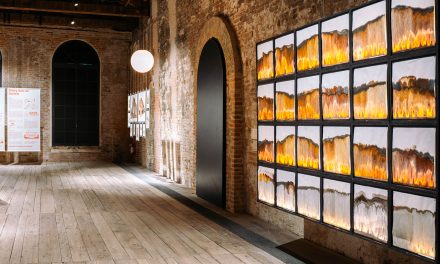
In addition to works produced by Rahmi Aksungur throughout various periods of his artistic life, the exhibition features more than 70 sculptures, as well as examples from his sketchbooks and sculpture drawings, borrowed from essential institutions and various collectors in Türkiye.

Rahmi Aksungur, who made significant contributions to modernist art by blending the traditions of the past with the possibilities of the future in his works, was born in Izmir in 1955. In 1979, he graduated from the Sculpture Department of the Istanbul State Academy of Fine Arts with the Outstanding Achievement Award for his diploma thesis. In 1982, he started working as a research assistant at the same university. In 1983, he received his proficiency in art from the Sculpture Department, followed by an associate professorship in 1994 and a professorship in 2000. He served as the dean of the Faculty of Fine Arts at Mimar Sinan Fine Arts University between 2002 and 2006, and as the rector of the same university between 2006 and 2010. Aksungur, who opened his first solo exhibition in 1988, participated in many group exhibitions at home and abroad throughout his artistic career. The artist’s sculptures have been included in private and corporate collections as well as the permanent collections of museums such as the İstanbul Modern, Türkiye İş Bankası Painting and Sculpture Museum and Odunpazarı Modern Museum. The artist has created sculptures that have left a mark on the collective memory in public spaces in Türkiye and abroad and has won many awards. Rahmi Aksungur received the Sedat Simavi Visual Arts Award in 2001. In the same year he received the first prize with his sculpture project in the competition titled “Republic History Editing (Cumhuriyet Tarihi Düzenlemesi)” organized by the Ministry of National Defense. This project can be seen in the State Cemetery in Atatürk Forest Farm (Atatürk Orman Çiftliğindeki Devlet Mezarlığı) as one of the most comprehensive sculpture projects in Türkiye. Aksungur continues his work in his studio in Istanbul. Aksungur’s large-scale sculpture “Longing” (2023), which he produced specifically for the opening of the Türkiye İş Bankası Painting and Sculpture Museum, centers on the dramatic story of the swordfish, which is now rarely seen in the Bosphorus. The work tells the impact of human intervention on the ecosystem in an artistic language.

In a recent interview Rahmi Aksungur gave to the Turkish Daily newspaper Hürriyet, he made the following statements about the current exhibition: “The idea of holding a retrospective exhibition was a difficult decision for me at first. Because throughout my 50 years of professional life, I have always pursued innovations and never looked back. When I walked around the gallery though, I saw that this gave me the opportunity to look back and question the past.” The reporter Gizem Çetimen further states in this report that the visitors to the exhibition start getting first an impression about the life of the artist, starting with a picture of Aksungur as a baby and continues with his pictures with his parents and later with his wife. One of the most interesting pictures is a picture of the first sculpture he created at the age of 13. The exhibition continues with Rahmi Aksungur’s pencil drawings and sketchbooks that point to the very beginning of the production process. The notes and scribbles on the sketches offer the viewer the opportunity to witness the artist’s world of thought and the creation of the sculpture.

The answers Rahmi Aksungur gave to the questions of Baran Danış for the May issue of Milliyet Art Magazine reveal some of his motives:
Q: The grid form that stands out in your exhibition draws attention as both a structural tool and a form of expression free from narrative. How has this form gained meaning for you since the period you first started using it in your works?
A: Although the forms in question date back to the 1980s, I frequently used them as solid masses in my works in the 1990s. In later years, I also started to apply them as voids. When I used them as voids, I designed them in a way that would show the interior of the sculpture and allow it to be read in its inner form. I tried to give two or more forms in the same visual process. In such works, encompassing space and having multiple emotions and thoughts within the same mass is an exciting application process for me.

Q: In your sculptures, we see the collision of human figures with abstract structures. What kind of inquiry does this collision offer you regarding concepts such as identity, individual, and system?
A: This is not a conflict, but harmony and dynamism resulting from the unity of opposites. I use geometric and its opposite, organic forms together. With its multidimensional structure, sculpture art allows for the rapid transfer of information, thought, experience, and emotion to the viewer, opening the door to multifaceted questioning. The fact that three-dimensional works provide the opportunity for multiple perceptions also allows the viewer to incorporate their thoughts and emotions into the work during the viewing process. Sculpture art develops people’s ability to think freely, with aspects like these.
Q: How does your choice of material—especially bronze, wood and composite materials—affect the aesthetic and conceptual aspects of the work? Is the material a starting point in your production process, or does it take shape later?
A: The material is of no importance to me; I primarily benefit from its creative possibilities during the application. Today’s technologies and possibilities are an instrument that accelerates my work. The sculpture I want to create takes shape first in my mind, and I question it in many ways; this questioning can sometimes last for months. When the application process begins, my feelings and thoughts direct that work. ■