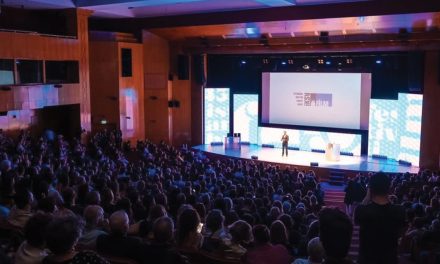
THE TÜRKİYE PAVILION AT THE 19TH INTERNATIONAL ARCHITECTURE EXHIBITION OF LA BIENNALE DI VENEZIA ADDRESSES THE RELATIONSHIP BETWEEN ARCHITECTURE AND THE SOIL WITH EXAMPLES FROM TÜRKİYE
Grounded invites us to ask a profound question: Has architecture ever
truly touched the ground?
By Erol Güler, PhD
Grounded (Yerebasan) emphasizes that soil is a memory carrier and living space, while drawing attention to the fact that it is an active subject that moves, resists, carries information, and establishes relationships. The curators emphasize in Grounded that architecture is an integral part of a social, ecological, and historical network of relations beyond spatial production. In this respect, Grounded is an exhibition that focuses on understanding, listening, researching, and thinking inspired by soil. The Grounded (Yerebasan) exhibition can be visited until November 23, 2025.
Grounded brings together works produced by individuals and teams in different mediums, ranging from painting, installation, three-dimensional architectural production, digital research techniques and academic studies. This diversity in the exhibition invites visitors to think, interpret, and re-imagine soil from different perspectives. Since some of the works exhibited are biological installations, they will change and transform during the exhibition; this makes the exhibition not only a structure to be watched but also a living structure. The exhibition invites everyone to ask and think about the question “Has architecture ever touched the ground?”
Grounded approaches soil as a carrier of ecological and cultural memory, presenting it as an ecosystem that embodies natural intelligence and serves as a living archive and supportive model. The exhibition highlights how this often-overlooked element offers crucial insights into past civilizations and ecological systems, underscoring the potential for coexistence with nature. With a blend of innovative research and traditional soil-construction techniques, Grounded fosters an interdisciplinary narrative that broadens global understanding and encourages meaningful dialogue. It brings together visions of the future that equally value life above and below the soil, therefore challenging us to consider the profound impacts of human activities, such as construction, mining and industrial development, on the surface and in the deeper layers of the earth. The exhibition invites reflection on the often-hidden consequences of these activities, including the loss of biodiversity and the erasure of cultural histories. Inspired by Türkiye’s rich heritage, particularly archaeological sites such as Göbeklitepe, the project highlights the importance of integrating traditional practices that illustrate ecological understanding with modern sustainable architectural approaches. This vision seeks to honor both environmental and cultural legacies.
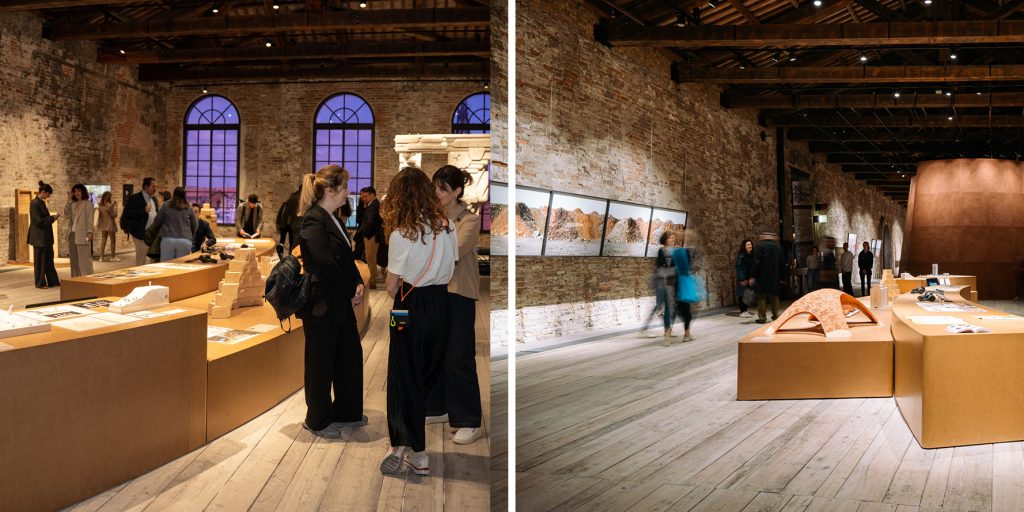
Commenting on the relevance of the subject for the Türkiye Pavilion, the curators Ceren Erdem and Bilge Kalfa said: “With Grounded, we invite visitors to view soil not as something separate, but as an integral part of the same fabric of life that surrounds us. It is not merely a surface beneath us or a resource to be extracted; rather, it is a dense, intelligent world in its own right—one we are already part of. Through material experiments, artistic documentation, and scientific observation, the exhibition encourages us to rethink our role in this dynamic exchange. It prompts us to recognize the structures we erode and the possibilities we often overlook. In doing so, it suggests ways of living and building that do not impose themselves but instead listen to and engage with the environment.”
İKSV General Manager Görgün Taner said the following about the exhibition to be held at the Venice Architecture Biennale in 2025: “As IKSV (Istanbul Foundation for Culture and Arts), we give great importance to the representation of cultural, artistic and intellectual production of Türkiye abroad, and we work to increase international interaction opportunities for creative professionals both through the activities we organize in Istanbul and our events abroad. This year in Venice, under the leadership of our curators, we are hosting an exhibition with broad participation, addressing traditional models with new technologies, examining current issues from new perspectives, and bringing together projects that offer hope for the future.”
The Türkiye Pavilion exhibition is commissioned by İKSV, with the contribution of the Ministry of Culture and Tourism, and under the auspices of the Ministry of Foreign Affairs of the Republic of Türkiye. It is cosponsored by Schüco Türkiye and VitrA, with the airline partnership of Turkish Airlines. The Türkiye Pavilion has been part of the International Architecture Exhibition in Venezia since 2014, thanks to the acquisition of Arsenale’s Sale d’Armi for twenty years between 2014 and 2034, on the initiative of İKSV and with the support of 21 sponsors.
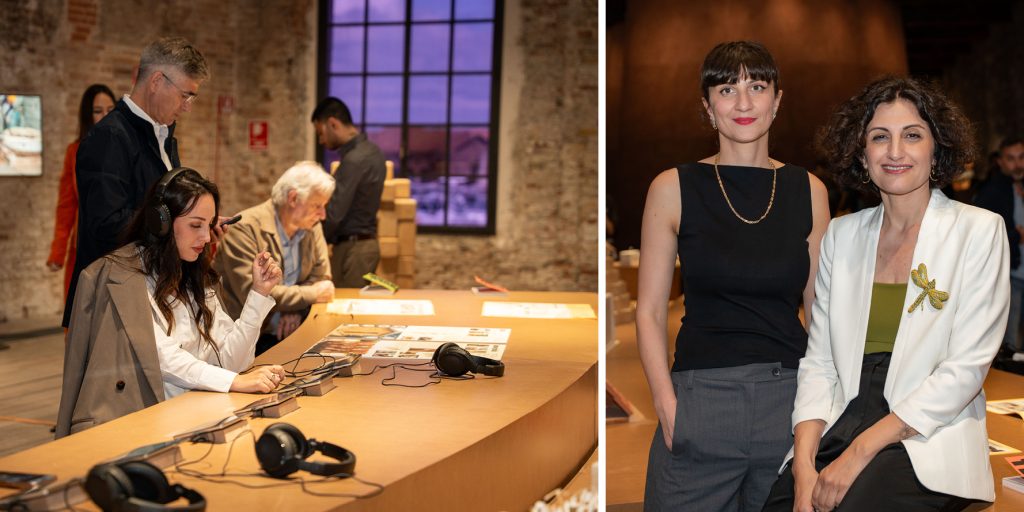
The book of the Grounded project:
The publication includes the text of the curators and explanations of the works of the participants. It examines the conceptual framework of the exhibition, research methods, and collective production processes with texts from writers from different professions. The book with the same title, which accompanies the Yerebasan (Grounded) exhibition, opens with the questions, “Are you an architect? Have you ever considered how much soil you have shaped or moved over the years? Could the layers you interact with hold the key to a more harmonious relationship with the Earth?” In addition to the most detailed writings and visuals about the works and architectural projects in the exhibition, the book also includes autobiographical narratives from the curators about the exhibition. Many people contributed to the book with their writings, which was prepared under the editorship of Melis Cankara. The design of the book belongs to Paleworks, which is also responsible for the visual identity of the exhibition.
The Turkish version of the book, published in partnership with YEM Yayın, is available for sale in bookstores, yem kitabevi, and other online bookstores. The English edition of the book, published in partnership with ListLab, is available from Venice Biennale booksellers and ListLab’s contracted suppliers.
Further information on Grounded can be found at here. ■
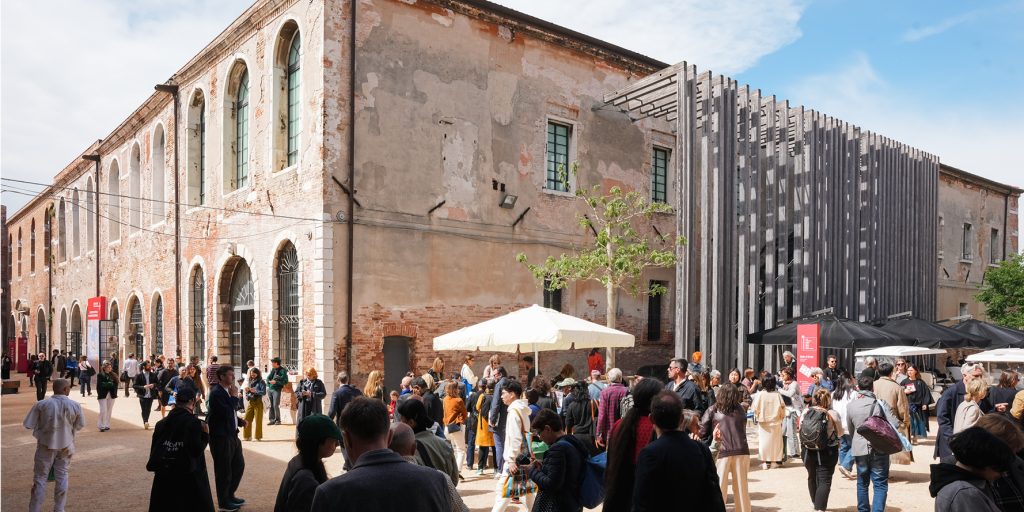
What is a Biennale
A Biennale is an event that occurs every two years. While the term can be applied in a variety of contexts ranging from botany to politics, it is most commonly associated with large-scale international art exhibitions and cultural festivals. The word originates from the Latin biennium, meaning “two years”.
The most iconic and historically significant biennial is the Venice Biennale, established in 1895 in Venice, Italy. Created to celebrate and promote contemporary art, it was originally conceived as a national exhibition to showcase Italian art but quickly evolved into a global platform featuring artists from around the world. Over time, the Venice Biennale expanded to include architecture, dance, music, theatre, and cinema, setting a model that many other biennials would follow.
Following the success of the Venice Biennale, many cities and institutions worldwide began organizing their own biennials. These events became key cultural markers, not only reflecting current artistic trends but also engaging with broader social, political, and environmental themes. Today, there are hundreds of biennials globally, each with its own unique focus and character.
A Biennale typically serves as a curated exhibition or series of events that showcase contemporary art and ideas. It often features a combination of established and emerging artists, offering them a stage to present new work, experiment with forms, and reach international audiences. The structure may include a main curated exhibition, national pavilions (as in Venice), satellite exhibitions, public programming, talks, workshops, and performances.
Biennials differ from traditional exhibitions by emphasizing temporality, site-specificity, and dialogue. They often reflect the cultural, social, and political context of the host city or country, turning the event into a mirror of both local and global issues. For example, a biennial held in a post-industrial town might explore themes of urban decay and regeneration. At the same time, in a post-colonial context, another approach may focus on identity, memory, and resistance.
Beyond their artistic merit, biennials have a significant cultural and economic impact. They attract curators, collectors, critics, and tourists, boosting local economies and raising the international profile of host cities. Biennials also help cultivate art infrastructure in regions where museums or galleries may be limited, offering education and exposure to contemporary practices for both audiences and artists.
However, biennials are not without criticism. Some argue that the proliferation of biennials worldwide has led to a homogenization of artistic content, driven more by global art market trends than by genuine cultural exchange. Others question their sustainability, especially considering the environmental impact of international shipping and travel. In response, some organizers have started to reimagine the biennial format, focusing on local engagement, slower production cycles, and more inclusive curatorial practices.
In summary, a biennial is more than just a recurring event—it is a dynamic platform for artistic innovation, cultural diplomacy, and critical conversation. Whether in Venice, Dakar, Sharjah, Sydney or İstanbul, biennials offer an opportunity to reflect on the state of the world through the lens of contemporary art. As the global landscape continues to evolve, so too does the biennial, adapting to new challenges while maintaining its relevance as a key feature of the cultural calendar.
The 19th International Architecture Exhibition of the Venice Biennale, whose title and theme were announced as “Intelligence – Natural – Artificial – Collective” by Pietrangelo Buttafuoco, President of the Venice Biennale, and Carlo Ratti, curator of the 19th International Architecture Exhibition, can be visited in the two main exhibition venues, the Giardini and the Arsenale, as well as in various venues in Venice, from May 10 to November 23, 2025.
The curators: Ceren Erdem and Bilge Kalfa
Ceren Erdem: Ceren Erdem is an Istanbul-based curator who has worked on exhibitions and publications internationally. She received her MA in Modern Art: Critical and Curatorial Studies from Columbia University, New York, her MFA in Visual Arts – Visual Communication Design from Sabancı University, Istanbul, and her BSc in Industrial Product Design from Istanbul Technical University. Some of her projects include Tack, Limb, Ilizarov, Depo, Istanbul (2023); All Else Is Far (2021) and Ad Infinitum (2019), Dirimart, Istanbul; Inverse Grayscale, Pasinger Fabrik, Munich (2016); Istanbul. Passion, Joy, Fury, Fondazione MAXXI, Rome (2015); Water Knows All My Secrets, Pratt Manhattan Gallery (2015), and Private Matters, apexart (2014), New York. Erdem has taken full-time roles at Dirimart, (Istanbul), Tina Kim Gallery (New York), British Council Türkiye (Istanbul), and Istanbul Biennial.
Bilge Kalfa: Bilge Kalfa is a Berlin-based architect, adjunct professor at Berlin International University, and owner of Bilge Kalfa Architecture. She is a graduate of Istanbul Technical University’s Faculty of Architecture with a bachelor’s and master’s degree. Kalfa’s expertise encompasses all phases of architectural and interior design, as well as furniture design that emphasizes natural, cyclical materials. She also co-owns The Keep, an artisanal rug company. In 2010, she received a national architectural prize for the group project İmkanmekan. She has completed numerous projects in Istanbul and Berlin, including the renowned Moda Sahnesi and Theater Hall at Boğaziçi University, with her former business partner. Her approach aims to honor as fully as possible the interconnectedness of life and the environment.