“So, you set out to travel to Rome… and end up in Istanbul. The journey, not the destination, becomes a source of wonder.”
Loreena McKennitt, Canadian musician and composer
By Mehmet Ali Munir
Ottoman Gentlemen take to the Skies.
Classic travel writer and raconteur Evliya Çelebi (Çelebi, a gentleman) mentions two inventors who took to the skies. During the reign of Sultan Murat IV, a certain Hezarfen Ahmet Çelebi supposedly flew from Galata Tower in the year 1630 with a combination of wings and a glider, landing safely in Doğancıler Square across Bosphorus Strait.
Two years later, Evliya Çelebi claims to have seen a second flight by Lagari Hasan Çelebi, the brother of Hezarfen Ahmet Çelebi, in honor of the birth of the Sultan’s daughter, by launching himself with seven winged rockets filled with 140 pounds of gunpowder from Sararyburnu promontory below the royal palace.
He lived the fiery ordeal. Evliya Çelebi claims that the Ottoman rocket man boasted these words before his flight: “O my sultan! Be blessed, I am going to talk to Jesus!” after he landed in the sea, swimming ashore, he jokingly added, “O my sultan! Jesus sends his regards to you!”
Lighter than Air…Or Not
The citizens of Istanbul had to wait for a long time to be mesmerized by flying objects again. Two years after the Montgolfier brothers invented the hot-air balloon in France, two Iranian balloonists lifted from Topkapi Palace and landed in Bursa by taking along an Ottoman Imperial Guard in 1785, making the first intercontinental flight on record.
British-born Rufus Gibbon Wells (1816-1896) also flew in a balloon over İstanbul in 1871 for his worldwide tour and balloon demonstrations.
In 1903, Kitty Hawk, North Carolina’s dunes, witnessed the first flight of a heavier-than-air machine crafted by brothers Orville and Wilbur Wright, bicycle repairmen from Dayton, Ohio.
Six years later, following other Western fliers, John D Cooper, an aviator and a leading test pilot for Glenn Curtiss, flew the first American airplane in Türkiye to participate in a worldwide sales campaign for demonstrations in front of the people of Istanbul. In a flight of ten minutes, he flew his Curtiss F2 seaplane from Küçükçekmece Lake, across the Marmara Sea to Kadıköy directly opposite, a town at the southern entrance to the Bosphorus, on the Asian side.
After hours of delay due to problems caused by adulterated fuel, he landed on the sea to great fanfare at a royal tent for dignitaries, cheering crowds on the shore, and members of the American Embassy, including Ambassador Morgenthau. Extensive coverage with photos in major newspapers Tanin, İkdam, and Tasfir-i Efkar, which covered the flight demonstrations. Royal and military members, the press, and the public took to the skies as passengers until dark, and the plane was moored on the Asiatic side for the evening.
After more show flights, his aircraft became the first American aircraft sold in the Middle East, further motivating Ottoman naval aviation. Curtiss received a very handsome price of $10,950 (A 1909 Ford Model T Touring car base price was $850), for his flying boat, although training may have been included like offers Curtiss made in Russia. However, the plane’s operational life was about a year, lacking parts and failing regular maintenance.
“Before the purchase of Curtiss’ aircraft, the Turks had ordered 15 Nieuport hydroplanes from France. The first two, a Type VI and a Type VII did not arrive; however, until after Cooper’s demonstration in June and July at the outbreak of the Great War in early August, the Ottomans requisitioned the three planes. The French Navy seized the others.”1 Soon, the Allies flew Nieuport two-seaters and armed French-built Nieuport 11s in the Gallipoli Campaign against the Ottomans.
The new Republic was also a point of interest for fliers.
In 1924, three planes of the famous Douglas World Cruisers, which circumnavigated the globe during a six-month flight through 28 countries, reached the Republic of Türkiye on July 10 via Syria after a non-stop flight from Konya to İstanbul for a 36-hour stopover at Yeşilköy Airfield, which was established in 1912.
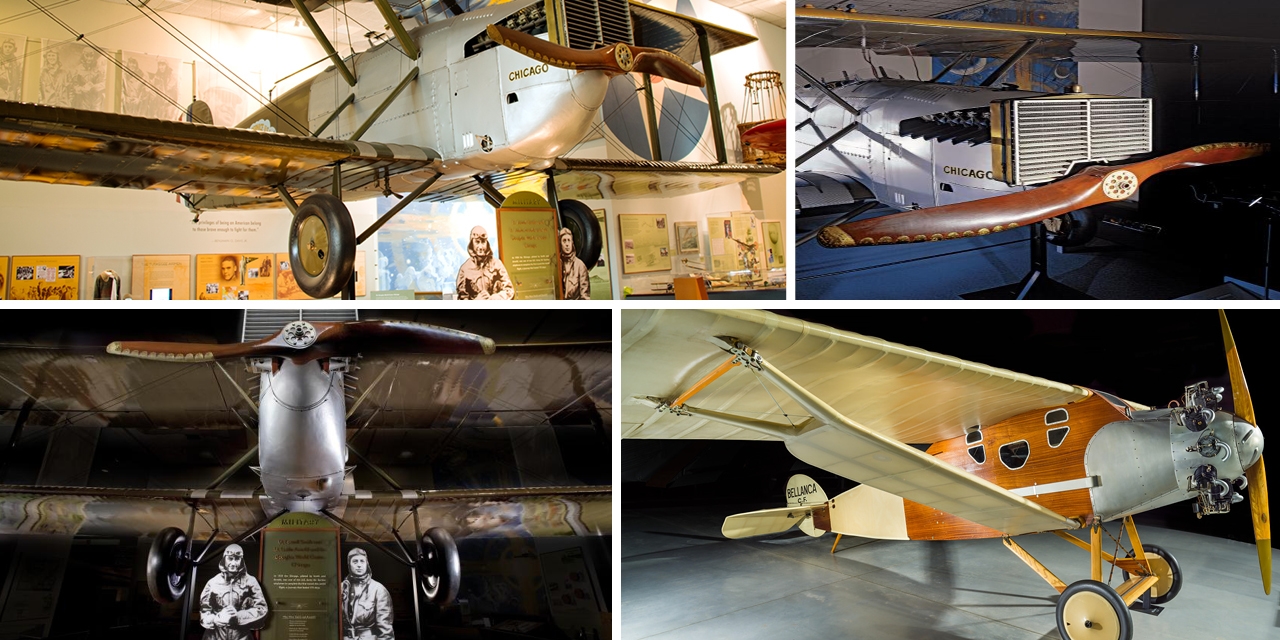
For the curious, one of those planes, “Chicago,” a Douglas World Cruiser, is on display at the Pioneers of Flight Gallery at the National Air and Space Museum, Washington, DC.
Record Flight of 1931
The time was right for US pilots Johnnie Polando and Russel Boardman to make history.
Their original target of Tehran was found too far and too risky. Moscow and Rome were not far away to break the distance record, so it was now the “destination Istanbul.”
They beat the record of the longest flight in the world with a flight lasting nearly 49 hours as the sixth Bellance Trans-Atlantic Flight, and by landing at Istanbul on July 30, 1931, after covering the distance of 5,011.8 miles from New York’s Floyd Bennett Field to Istanbul’s Yeşilköy Airfield.
To fly this distance efficiently, they stripped the plane of every unnecessary item, including a radio that proved too heavy, and they flew with a sizeable meteorological map and dead reckoning. They were airborne with 50 hours’ worth of fuel on board, far surpassing the recommended weight limit of the aircraft, and landed with only 20 minutes’ worth of gasoline left.
The pilots were greeted by Turkish government officials2, including the governor of Istanbul, Muhittin Üstündağ, and the ambassador of the United States, Joseph C. Grew3, who represented the United States at the Lausanne Conference in 1922-23 and was appointed as the first Ambassador to the new republic in 1927.
Their sealed barograph, which recorded the flight information, was removed immediately after landing to determine whether they had broken the record. Ambassador Joseph C. Grew also asked for assurances that they flew non-stop.
Upon hearing this feat, President Gazi Mustafa Kemal summoned the Americans to visit him in Yalova. “…just before their reception with the Gazi, they were presented the pendants by Prime Minister İnönü and the Chairman of the Turkish Aeronautical Association, Fuat (Bulca), who was also the Gazi’s childhood friend. The Gazi spoke in Turkish, which was translated into French by his Foreign Minister, Tevfik Rüştü (Aras). Ambassador Grew translated the French so that Boardman and Polando could understand. As it was, neither Boardman nor Polando had been out of America before.”4
Russell Boardman and John Polando enjoyed multiple Istanbul visits, events, and festivities. After a ten-day stay, they flew their plane to a European port and reached home on a ship, never to see Istanbul again.
Their record stood firm for nearly two years. Their modified plane, a Bellanca CF, an early enclosed high-wing monoplane designed by Giuseppe Mario Bellanca5 is on display at the National Air and Space Museum today.
Boardman died at the age of 35 after suffering injuries on takeoff in an air race. Polando, while in his 40s, enlisted as a World War II pilot and died at 833 years old in 1985 due to injuries he sustained on take-off from Hyannis Port Field. His wife Dorothy published his book Wings Over Istanbul: The Life and Flights of a Pioneer Aviator which devoted Chapter 10 to his time spent in Istanbul. The book was never translated and published in Türkiye. ■

Gazi’s statements in Yalova to American aviators flying from New York to Istanbul.
“The Turkish nation welcomed your extraordinary journey with heartfelt appreciation and affection. It followed the valuable guests who would rise from the American sky and appear in the Turkish sky with interest and excitement from the moment they flew from there until they reached the horizons of Türkiye and landed on our soil. It wished for your success wholeheartedly and rejoiced as if it were its success.
Indeed, your success is an unparalleled triumph of both science and technique, especially of human power in terms of skill and courage.
While uniting continents, you bring nations closer.
Heroes like you turn nations into family members interested in each other’s happiness and destiny.
I do not doubt that while you have united the marvelous land of North America, whose civilization we follow with admiration, and the New Türkiye, located in the old-world continents, you have also brought the hearts of Americans and Turks closer.
Today’s youth are the founders of friendships and affection between people and nations on heavenly paths that humanity had not imagined until our time. I am proud and happy to see and meet with brave and idealist youth of America like you who give the lofty signs of these lofty goals.
You have drawn a beautiful path from the sky. Your journey will also greatly encourage Turkish aviators to prepare.
I congratulate you warmly. I salute the honorable American nation, American knowledge, technology, and American aviation’s heroic representatives in your persons.”
I respectfully and lovingly remember your honorable President, who represents your high community to the world in a high manner, on this beautiful occasion. And I wish you pleasant travels and always such successes.”
(Hâkimiyet-i Milliye Newspaper, August 3, 1931)
………………………….
August 04, 1931
His Excellency Gazi Mustapha Kemal, President of the Turkish Republic, Yalova, Turkey
I am expressing my sincere appreciation for the courtesies that you have shown the American fliers Boardman and Polando following their successful flight from New York to Istanbul.
Herbert HOOVER
31st President of the United States: 1929 – 1933
………………………….
NOTES:
- Güvenç, Serhat, “Osmanlı Bahriyesinin İlk Deniz Uçağı: ‘Curtiss F Boat’ ve Deniz Havacılığının Temelleri”, Bilgi ve Bellek, 4 (2007), 43–55.
Leiser, Gary “John D. Cooper and His Demonstration of a Curtiss Flying Boat in Istanbul, 1914: The First American Aircraft Sold to Turkey” - “The state of civil aviation affairs in Turkey in 1930 was as follows: Two airlines, one French and the other Italian, served Turkey and represented almost all civil aviation activity in the country.
The sole exception was Turkish aviator Vecihi Hürkuş, who had built the country’s first aircraft, the K-VI, in Seydiköy, İzmir in 1924 and the first civil aircraft, the K-XIV, in Kadıköy, İstanbul in 1930. Though the country had become a member of the F.A.I. in 1929, it did not possess the proper infrastructure to certify Vecihi’s aircraft. As a result, he was forced to dismantle it in İstanbul and load it on a train for Prague, Czechoslovakia, where it received an airworthiness certificate.
The Societa Anonima Aero-Espresso Italiana maintained a semi-weekly seaplane service between Büyükdere, İstanbul, and Brindisi via Piraeus, Greece. The Compagnie Internationale de Navigation Aérienne (French) initiated service between İstanbul and Paris as early as 1921 as the Franco-Roumaine Compagnie.” [4] - For Joseph C. Grew See: TurkNetwork Article: Pg 55-56
- Article: FLIGHT TO TURKEY – 1931 by Stuart Kline [*]
[*] A chronicle of Turkish aviation by Stuart Kline is the most authoritative book and indispensable source on Turkish aviation.
560 pages: illustrations (some in color)
English and Turkish. Published by Havaş / Donence, 2002.
ISBN 9757054224 / 9789757054221
- Giuseppe Mario Bellanca, with an engineering degree from Politecnico di Milano previously designed his own parasol aircraft in Sicily.
He emigrated to the States and formed The Bellanca Aeroplane Company and Flying School in 1911 at Long Island New York. Bellanca was known mostly for long range aircraft breaking multiple records and winning trophies which led to the way for the future success of international and commercial air transportation. He changed the configuration for aircraft of the time creating the first modern aircraft design that featured an engine and propeller in the front with a wing in the middle.