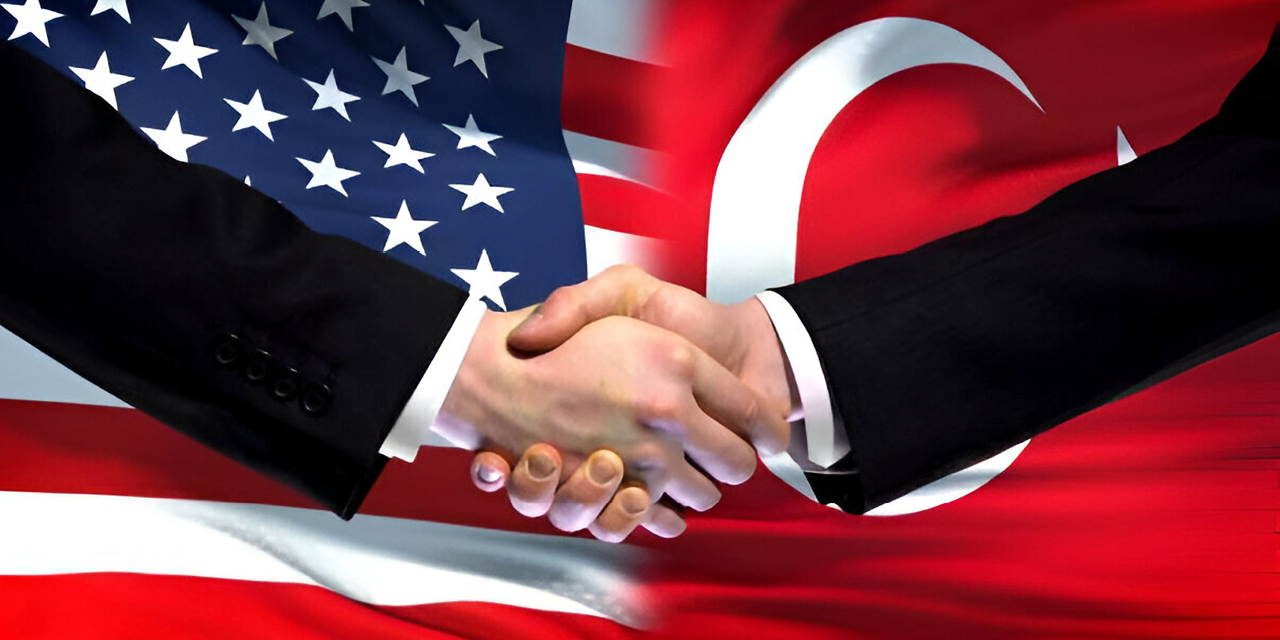
US-Türkiye relations in Trump’s new term hinge on resolving regional conflicts, addressing enduring issues, and leveraging strategic dialogue for mutual benefit.
By Yakup Akın
Donald Trump’s re-election as president of the United States on November 5, 2024, has opened the door to a new chapter in global politics and foreign policy dynamics. Trump’s hardline and pragmatic leadership during his first term left significant marks, particularly in US-China and US-Türkiye relations. In the new term, the question of how these dynamics will evolve is closely watched by international political circles. Based on Trump’s previous policies, two critical areas deserve close examination in the new term: the new dimensions of US-China competition and the potential scenarios in US-Türkiye relations.
New Frontiers in US-China Competition
The trade wars initiated during Trump’s first term were triggered by the “America First” policies, which identified China as the US’s primary economic adversary. These trade wars laid the groundwork for a long-lasting economic and strategic rivalry between the two nations. It is expected that these trade wars will intensify and expand significantly in the new term. Trump’s campaign rhetoric consistently framed China as the greatest threat to the US economy, signaling potential new sanctions on strategic industries such as steel and aluminum.
However, the competition is unlikely to remain confined to the economic sphere. Trump is expected to expand his tough policies in the technology sector during his new term. Restrictions on Chinese tech giants such as Huawei and TikTok could be extended, while US allies may be pressured to reduce their dependence on these technologies. Geopolitical tensions are also likely to rise. Trump may adopt a stricter stance on Taiwan and strengthen the US naval presence in the South China Sea, increasing the risk of military tensions with China.
Nonetheless, Trump, aware of the costs of this rivalry, is likely to remain open to certain transparent negotiations in strategic areas. Conditional cooperation in agriculture, technology, and energy may come to the fore. Additionally, new economic initiatives opposing China’s Belt and Road Initiative could reveal the multidimensional competitive approach of the Trump era.
A New Phase in US-Türkiye Relations
Three key factors will shape US-Türkiye relations during Trump’s new term: active regional conflicts, enduring issue clusters, and damage control mechanisms.
Active Conflicts and Opportunities
During his campaign, Trump pledged to take steps to resolve crises in Ukraine and the Middle East. The end of the Russia-Ukraine war could present Türkiye with significant opportunities in terms of Black Sea security and energy transit routes. Collaborative efforts between the US and Türkiye in rebuilding Ukraine could become a new chapter in their relations.
In the Middle East, Trump may seek to revive the spirit of the Abraham Accords. However, Türkiye is likely to express sensitivities about a model that excludes Palestine. Balancing the security concerns of Iran and Israel could highlight Türkiye’s mediating role in the region. Simultaneously, US support for Greece and Southern Cyprus will require Türkiye to engage in more active dialogue with Washington on these issues.
Enduring Issues and Strategic Dialogue
Long-standing issues in US-Türkiye relations will continue to persist during Trump’s new term. The PKK/YPG issue remains at the forefront. The US’s ongoing support for the PYD in Syria directly conflicts with Türkiye’s counter-terrorism policies. Additionally, tensions surrounding defense technologies such as the S-400, F-35, and F-16 are expected to continue. While Türkiye’s pursuit of strategic autonomy is met with skepticism in Washington, efforts to strengthen collaboration under the NATO umbrella could help ease these tensions.
Damage Control Mechanisms
Damage control mechanisms will play a crucial role in US-Türkiye relations during Trump’s leadership. The continuation of high-level dialogue between Trump and Erdoğan will be critical for resolving disputes. Institutional mechanisms like NATO and strategic dialogue platforms could also play a supportive role in easing tensions in Turkish-American relations.
Conclusion
Trump’s second term signals a complex and multifaceted period for both US-China and US-Türkiye relations. Trade wars, technological competition, and rising geopolitical tensions will define the US-China relationship. On the other hand, US-Türkiye relations hold new opportunities for resolving regional conflicts and addressing strategic issues. Trump’s pragmatic leadership approach could steer these dynamics toward a common-interest framework rather than conflict. ■